
#87 - ICS Canada News and Views Winter 2025

Dear Fellow Canadian Churchillians:
Your Board of Directors would like to send Seasons Greetings to All and Best Wishes for the New Year — Randy Barber, Terry Reardon, Myra Dodick, Sheryl Mercer, Colin Brown, Peter Campbell, Clayton Conlan, Cliff Goldfarb, Harry Marmer, Barrie Montague, Hartley Nathan, Rick Shaver, and Andy Smith.
Why Churchill Matters
The positive response received from our readers to Adam Howard’s impactful essay, “Why Churchill Matters,” featured in our Fall edition of News & Views, inspired us to initiate an ongoing dialogue with our supporters regarding the significance of Churchill in their lives.
We invite you to share your thoughts, which may be featured in our newsletter and on our website.
Our first contribution is from Dr. Andy Smith. A dedicated supporter of ICSC for many years, he was elected to the Board in 2025.
Since 2017, Andy has served as the President and CEO of Sunnybrook Health Sciences Centre. He is dedicated to advancing healthcare and has played an active role in quality improvement initiatives throughout Ontario for many years. His professional interests include healthcare leadership, innovation, and contributing to the ongoing development of the Canadian healthcare system.
Why Churchill Matters (To Me Today)

Winston Churchill has been a figure of fascination and inspiration in my life as long as I can remember. But my connection to him did not begin with my own reading of history; it began with my mother. She was born in Berkshire, England, one month after Hitler invaded Poland, and England was thrust into a war that would define not only her early life, but the character of a nation.
She was a product of wartime Britain and of the years immediately afterward, when the country was exhausted, yet resolute, rebuilding itself with a spirit of duty, discipline, and optimism that Churchill himself had come to personify.
My mother grew up during rationing, uncertainty, and the long shadow of war. Despite this, she was fortunate. She attended a convent school, trained as a nurse in Salisbury, and, with a sense of adventure that belied her quiet English roots, decided to take a six-month holiday to Canada with a fellow nursing graduate.
Those six months lasted a lifetime. She served Canada as an excellent nurse, married my father, and raised five sons. And although she rarely quoted Churchill directly, she embodied Churchill’s England through and through.
We were raised on simple, powerful maxims: get on with it and KBO, or “keep buggering on.” There was always an understated expectation of grit, a stiff upper lip in the most literal sense. We did not miss school for being “a little bit unwell,” nor were we allowed to shy away from challenges. That wasn’t how we were taught.
The humour, the resolve, the refusal to indulge self-pity — these were Churchillian values passed on through my mother’s lived experience far more effectively than any formal history lesson.

I first learned about Churchill as a boy growing up in the small town of Bowmanville, Ontario, but my deeper enthusiasm for and interest in him unfolded gradually. As I moved through my education, trained as a surgeon, and eventually transitioned into the role of CEO of Sunnybrook Health Sciences Centre, Churchill became a figure I returned to repeatedly, not only as a historical giant, but as a mentor from afar.
Sunnybrook, in its own way, is a Churchillian institution. Opened in 1946 as Sunnybrook Military Hospital, it was part of Canada’s national commitment to caring for soldiers returning from the Second World War. Today we remain Canada’s largest hospital for veterans of WWII, the Korean War, Afghanistan, and beyond.
We also increasingly serve active members of the Canadian Armed Forces — not only through medical care but as educators and partners in readiness. Several soldiers serve on our clinical teams, including trauma surgeons who bring extraordinary skill forged in conflict zones.
Walking Sunnybrook’s 100-acre campus, one encounters a bronze bust of Churchill outside the Veterans Centre, a physical reminder of the values we still aspire to uphold: courage, resolve, clarity of purpose, and service in the face of adversity. His presence on our grounds is not just historical ornamentation; it is an active prompt to reflect on what leadership looks like when it matters most.
My personal interest in Churchill evolved alongside my career. Over the years, patients — having heard of my enthusiasm — would arrive with books, coins, and Churchill memorabilia. I accumulated Churchilliana not by seeking it out, but through the kindness of people who wanted to offer something meaningful.
Among my favourites is a decorative plate commemorating Churchill’s passing in 1965, and, of course, my multiple sets of The Second World War. This monumental six-volume work has been described as widely owned but rarely read; in my case, it has been pulled from the shelf many times.
Each volume offers clarity and detail that still astonishes me, as does the candour and rhythm of Churchill’s writing. His speeches, too, have served as reliable sources of inspiration whenever professional challenges mount.
The “Blood, Toil, Tears and Sweat” speech, with its stark simplicity — “You ask, what is our aim? I can answer in one word: Victory” — remains a reminder that clarity and conviction matter deeply when one is entrusted with leadership.

But of all the Churchill artefacts in my possession, none is more meaningful than a photograph taken on the northern coast of France shortly after D-Day.
It was captured by Jack Ford, a Sunnybrook veteran and Canadian Forces photographer who landed with the troops to help document the liberation of Europe. Jack was an extroverted force of nature, even as a nonagenarian, and his stories always captivated me.
The photograph he took shows Churchill smiling but without his trademark cigar, an extremely rare combination in wartime imagery. Jack delighted in telling the story that there were few, if any, other such images from the period.
That photograph hangs in my office today, beside another gifted to me of Churchill aboard HMS Prince of Wales en route to meet Roosevelt in Placentia Bay. The inscription that accompanied it read simply, “These are lonely jobs.”

That note, understated but piercing, has stayed with me. It is grounding to look at Churchill’s face — weathered, resolute, weighed down with decisions of world-altering consequence — and draw strength from his example.
There is a famous line often attributed to Mark Twain: “History doesn’t repeat itself, but it often rhymes.” Churchill himself put it slightly differently: “The farther backward you can look, the farther forward you are likely to see.” Both sentiments feel acutely relevant now.
We live in a volatile and uncertain world. In Canada, we are confronting the reality that our Armed Forces require renewed investment, not only in equipment and personnel but in the civilian infrastructure that supports them. Healthcare is central to that effort.
Our responsibility, which Sunnybrook embraces with pride, is to prepare ourselves to care for those who serve, and to ensure that Canada remains capable of meeting challenges that we would all prefer to avoid.
Churchill’s warnings in the 1930s echo loudly today. The subtitle of The Gathering Storm offers a sobering reminder: “How the English-speaking peoples, through their unwisdom, carelessness, and good nature allowed the wicked to rearm.”
While we strive above all to prevent conflict and keep Canadians safe, we must also avoid the unwisdom and carelessness of unpreparedness. With a nephew who serves as a captain in the Canadian Armed Forces and has deployed to Latvia, this is not abstract for me.
Ultimately, what Churchill offers me is not nostalgia, nor hero worship, but guidance. As a former cancer surgeon and now as a healthcare leader, I find in him a wellspring of clarity on effort, purpose, and perseverance.
His messages — never surrender; never give in; work relentlessly; remain optimistic; find humour; restore yourself through hobbies; maintain balance — are timeless. They are also deeply practical for anyone entrusted with responsibility, especially in moments that demand extraordinary resolve.
Churchill once joked that he was a glow-worm. The rest of us may not shine as brightly, but we can strive to “unleash our inner glow-worm,” to use whatever illumination we can muster in service of our purpose and of our country.
In life, we are fortunate when we can assemble a small tribe of mentors, some living, some historical, who help to shape us, steady us, and push us forward. For me, Winston Churchill remains firmly in that circle.

He matters to me not simply because of what he accomplished, but because of how he thought, how he endured, and how he led. His life, his words, and his example acontinue to help me navigate the challenges of my own work and to remain anchored in optimism, duty, and the conviction that, even in uncertain times, we must keep buggering on.
Andy’s most recent article, published in The Hill Times, is “Readiness is built, not assumed: preparing our health system for crisis.” Subscription required.
For additional information on Jack Ford:
The Globe and Mail: Remembrance Day — Jack Ford, photographer
2025 Outreach Initiative
In 2024, your Board developed a strategic plan to broaden the Society’s outreach, which was implemented in 2025. The success of this year’s initiative was made possible through your generous donations.
University of Toronto: Trinity College, Graham Library
The International Churchill Society Canada is pleased to announce that we have provided financial support for an exciting new project at Trinity College, University of Toronto.
The focus of this endeavour is to enable digital access to the Winston S. Churchill Collection, located in the John W. Graham Library. This collection comprises significant first editions along with translations of Churchill’s works, original correspondence, and memorabilia, along with notable publications about Churchill.
The Churchill Collection serves as a valuable scholarly resource for historians, textual scholars, material culture researchers, and experts in international affairs, political science, and public policy.
To improve the accessibility of the collection, the John W. Graham Library is expanding its online presence with images and descriptions to better display and demonstrate the collection. International Churchill Society Canada is proud to be associated with this timely and important initiative.
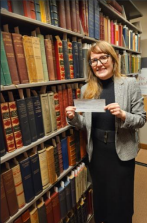
Kate MacDonald, Librarian & Director, John W. Graham Library

For additional information related to the collection:
2025 Financial Scholarships
Winston Churchill Collegiate Institute

Kayla Lawrence, a recent graduate of Winston Churchill Collegiate Institute in Scarborough, Ontario, is the winner of the WCCI essay contest sponsored by ICSC.

Kayla is studying Kinesiology and Physical Education at the University of Toronto.
Lily McClean, winner of the ICSC academic achievement and leadership bursary at WCCI, is studying Astronomy and Astrophysics at the University of Toronto.
Tyndale University, Toronto, Ontario

In 2025, ICSC broadened its Outreach Initiative to include a financial award for the student attaining the highest academic achievement in Brad Faught’s dedicated history course, Winston Churchill: His Life, Times and Leadership.
ICS Canada is pleased to announce the winner, Evan Kantel, from Carleton Place, Ontario. He will be graduating this year with a degree in History and Psychology.
Dr. Faught, a regular contributor to Finest Hour magazine, is well regarded by Canadian Churchillians for published books, two of which focus on Churchill: Cairo 1921: Ten Days That Made the Middle East (2021) and Churchill and Africa: Empire, Decolonisation and Race (2023).
For additional information on Dr. Faught:
MacLachlan College

On October 9, a long-time ICSC supporter, author, and retired teacher delivered two interactive presentations on Churchill and leadership to students at MacLachlan College.
Paul’s most recent Churchillian article can be found in Finest Hour #206, Summer 2024: “World Hero Number One!”
Finest Hour Magazine #210 — Fall 2025

Due to matters relating to the U.S. publisher, Finest Hour #210 was mailed to print subscribers on December 9. Subscribers to the digital edition received their access link on December 10. Should you have any questions, please do not hesitate to contact us.
A third payment option has been introduced to facilitate the renewal process. If you are interested in renewing via bank e-transfer, please contact us for additional information.
Painting as a Pastime
Churchill’s “Marrakech” Hits $1.3 Million at Canadian Auction House

Taking into consideration the recent record-setting $1,300,000 sale of Churchill’s Marrakech painting, what better occasion to share the link to his book, Painting as a Pastime, published in the United States in 1950.

Please note: This is a Project Gutenberg Canada e-book. It is made available at no cost and with very few restrictions. The restrictions apply only if you make a change in the e-book, other than alteration for different display devices, or if you are making commercial use of the e-book.

If either condition applies, please consult the Project Gutenberg Canada licence information before proceeding.
Chateau Laurier: Roaring Lion

With the Roaring Lion now back in residence at the Château Laurier, we invite our supporters to visit and have their photo taken with Sir Winston.
Pictured: Myra Dodick, ICS Canada Treasurer & Director, and Lee Power, Administrative Assistant to the General Manager, Château Laurier, Ottawa, Ontario.
And What Have You Been Up To?
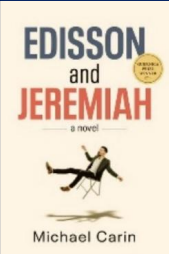
Michael Carin, a long-time ICS Canada supporter, has published another award-winning novel.
For more details, along with an excerpt:
International Churchill Society
42nd Annual Conference — October 2025 Opening Remarks
Churchill: The Finest Half Hour
Professor Richard Toye and Dr. Warren Doctor present a podcast focused on Churchill’s career during the war.
Article Submissions by ICSC Supporters
Upcoming newsletters will feature essays contributed by ICS Canada supporters. Individuals interested in submitting a Churchillian essay or article for consideration are invited to contact us.
We are pleased to include Eric McGeer’s essay as our first in this series.
Churchill and the Netherlands
By Eric McGeer
A good many issues of Finest Hour or the Churchill Bulletin are devoted to Churchill and a particular country — for example, Russia, Ireland, and Italy — a region, such as the Middle East, or a place, including Blenheim and Chartwell.
The topics covered in these issues range over the military or diplomatic policies that Churchill pursued with a given country in times of war or peace, his impressions of its leaders, people, or culture, the reputation he enjoys, or does not enjoy, in the history of different countries, and the places where he found solace or inspiration.
Of especial interest to Canadian readers is the Spring 2012 issue of Finest Hour (No. 154), which presents a series of articles recounting Churchill’s visits to Canada — nine in all — the mutual regard between him and the Canadian people, and his gratitude for Canada’s open-handed commitment to Britain’s war.
The real highlight is a contribution from the photographer Yousuf Karsh, whose iconic portrait of Churchill captures better than any other the indomitable character of its subject.
The “Canadian” edition of Finest Hour leads into this short piece on Churchill and the Netherlands. This past May marked the eightieth anniversary of the liberation of the Netherlands, in which First Canadian Army played the leading role.
There is a strong case to be made that freeing the Dutch from the worst threat to their country and traditions in their entire history stands out as Canada’s finest hour.
It comes as something of a surprise that scouring Finest Hour yields only sporadic references to Churchill’s experience of the Netherlands and his relations with its leaders and populace.
The occasion garnering the most attention is his visit in May of 1946, which coincided with the first anniversary of VE-Day. He spent five days in the country, meeting with a rapturous welcome from the crowds at every stop along the way.
Honours from the cities of Amsterdam and Rotterdam, an honorary degree from the University of Leiden, and an address to the Estates General — equivalent to the Dutch Parliament; text in the Winter 2013–14 issue of Finest Hour, No. 161 — conveyed the gratitude of the Dutch to the British Prime Minister who, when all seemed lost, had carried on the fight against a tyrant whom their own Queen Wilhelmina had denounced as “the arch-enemy of mankind.”
Wilhelmina and Churchill had been of one mind during the 1930s with regard to the threat posed by Nazi Germany. Whereas Churchill could voice his misgivings openly, the Dutch sovereign took care not to raise her concerns in public so as not to reveal a rift between her and her cabinet ministers.
Although aware of the weakness of the Dutch army, even with a defensive scheme in place, they hesitated to build up their military lest it signal hostility toward Germany. They naively failed to discern Hitler’s scorn for the policy of neutrality, which both sides had respected during the First World War.
They also dismissed Churchill’s repeated proposal that the smaller countries bordering Germany or within striking distance — Belgium, the Netherlands, Denmark, Switzerland, Sweden, and Norway — align themselves with Britain and France to deter German aggression.
They believed that such an alignment might instead pull them into a conflict they considered both necessary and possible to avoid. They put their faith in German assurances of friendship and that Dutch neutrality would be respected.
But Wilhelmina had taken the measure of Hitler. Any illusions among her ministers and generals that the Netherlands would remain out of harm’s way began to crumble when the Germans invaded Denmark and Norway early in April 1940.
The very real implications for the Netherlands were clear, but by this point it was too late to bolster the country’s inadequate defences.
Even before King George asked him to form a government on 10 May 1940, Churchill’s first order of business was to meet with Dutch ministers bringing word of their country’s invasion that very morning. Their shock and incomprehension were palpable.
There is a touch of “I told you so” in Churchill’s The Gathering Storm when, in reference to the fate that had befallen the Netherlands, he reminds the reader of the warnings he had issued to the neutral countries of the dangers lying before them: “My words had been resented.”
Wilhelmina, in contrast, seems a Dutch version of Churchill. Formidable and blunt even by Dutch standards, inspiring more awe than affection among her subjects, she personified the unity of her people.
As the head of a government in exile from 1940 to 1945, her iron resolve to embody her country’s will to survive matches the indefatigable spirit projected by Churchill in the darkest days of 1940.
In a precedent that springs readily to Dutch minds, not least to hers, 1940 was Queen Wilhelmina’s rampjaar, or “year of disaster.” The parallel was the year 1672, when the Netherlands was nearly extinguished by the absolute monarch Louis XIV, the arch-enemy sans pareil, who formed a coalition of France, England, and other powers that attacked the country by land and sea, only to be repelled in the end by the heroes of seventeenth-century Holland.
In keeping with this proud tradition, Wilhelmina was, in Churchill’s judgment, “the only man in the Dutch government.” And for good measure, “I fear no man in the world but Queen Wilhelmina.”
Even if apocryphal, these pronouncements are in accordance with Churchill’s respect for Wilhelmina, and a reproach to the wishful, overly cautious assessment on the part of Dutch political and military authorities of an intimidating regime whose sinister and aggressive intentions they could not bring themselves to face.
The hero’s reception in 1946 and the events of 1940 go some way to show the ambivalent attitudes Churchill held towards the Netherlands.
Five days after the outbreak of the First World War, when he was First Lord of the Admiralty, he proposed seizing Ameland, one of the islands in Friesland, for use as a naval and air base to contain or bomb German shipping.
In other words, Dutch neutrality need prove no obstacle, even though less than a week before the German violation of Belgian neutrality had brought Great Britain into the war.
In his typically impulsive way, Churchill put pressure on the Dutch government to join the Allies since he recognized the strategic advantages that the Netherlands offered, not just by sea but as a possible line of advance into Germany and the vital Ruhr industrial base — a prefiguration of Operation Market Garden in September 1944.
However far-fetched and contradictory these ideas were, they do attest to Churchill’s desire to find a way out of the deadlock along the Western Front, which Dutch cooperation might offer.
But he found these thwarted plans a source of annoyance towards the Netherlands, in the same way that he would find their hopes of maintaining neutral status unrealistic as he argued in vain for the collective security of the smaller nations during the 1930s.
Yet in one way, he foresaw what the price of victory would prove to be in the second great conflict for both the Netherlands and Great Britain: exhausted and badly damaged by the war, both were relatively small European countries with large overseas empires which they would gradually relinquish, not always amicably, in the years after 1945.
In short, the intersections where Churchill and the Netherlands meet deserve more attention, all the more so since the story truly begins with his ancestor, the Duke of Marlborough, who holds an important place in the history of both countries.
About Eric McGeer
Eric McGeer, based in Toronto, is a longtime supporter and friend of the International Churchill Society Canada family.
A sampling of his many publications includes two volumes of the personal inscriptions on the headstones of Canadian soldiers fallen in both wars, guidebooks to the Canadian battlefields in Italy, and a history of the Canadian Officers Training Corps at the University of Toronto.
He is currently working on a study of the relations between Dutch civilians and Canadian soldiers in the Nijmegen area before and after the end of the Second World War.
He has also taught at the university and high-school levels, as well as in adult education programmes.
Additional information relating to Canadians in the Netherlands during the Second World War can be found in Eric’s article in Canadian Military History, 2024, Vol. 33, Issue 2: